
26 Sep 2026


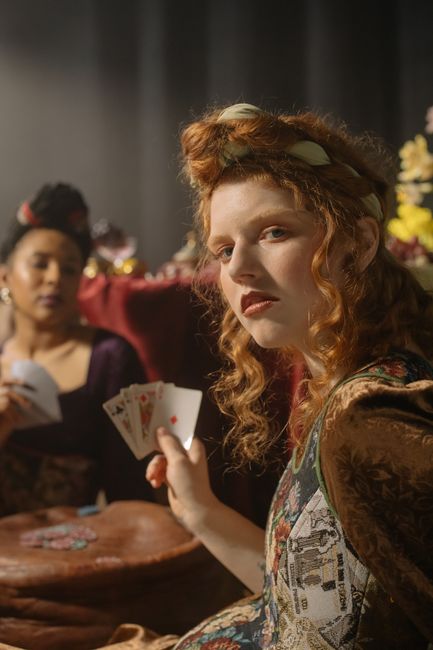
The first time you sit at a real poker table after years of playing online, something strange happens. You already know the odds cold, but your hands still shake when you push a raise into the middle. That gap between knowing the math and feeling the pressure is where iGaming actually lives. Anyone can memorize a chart. Fewer people understand why the whole ecosystem is built the way it is. Let's walk through it.
Whether you're spinning slots at 2 a.m., grinding micro-stakes poker, or debating whether that weekend accumulator is worth the sweat, the same handful of principles sits underneath everything. Learn them and you stop being a mark. Ignore them and the house keeps its edge — patiently, quietly, forever.
Every game you'll ever touch in a casino, online or brick-and-mortar, is priced. Not in dollars, but in a percentage. That's the house edge, and it's the single most useful concept a player can internalize.
Notice what this actually means. Over thousands of hands, the edge grinds you down. Over a hundred spins on a Friday night, variance does whatever it wants. The edge is real, but it's a long-term tax, not a short-term curse. Players who confuse the two either get cocky or get paranoid. Neither helps.
Slots are the most misunderstood product in iGaming, partly because they look simple. They're not. Two numbers govern almost everything you experience.
RTP — Return to Player is the theoretical percentage of all wagered money a machine pays back over millions of spins. A 96 percent RTP slot returns $96 for every $100 cycled through it, in theory. That doesn't mean you'll lose exactly $4 tonight. It means the math is baked in.
Volatility is the other half. A low-volatility slot pays small amounts often. A high-volatility slot pays rarely but can pay monstrously. A 96 percent RTP high-volatility slot and a 96 percent RTP low-volatility slot will feel like completely different games — one is a slow bleed, the other is a knife fight with occasional gold. A good place to continue is สล็อต.
Here's the thing. Slots don't get hot. They don't get cold. Each spin is independent, run by a random number generator that has no memory and no opinion about your feelings. The 'hot machine' story is one of the oldest and most profitable myths in the industry, mostly for the industry.
What you can control is which slot you pick and how long your bankroll lasts. If you have $50 and want a two-hour session, a low-volatility game is your friend. If you want a shot at a $5,000 hit before midnight, you're buying a lottery ticket with better odds and worse manners.
Poker is the outlier. In every other casino game, you're playing against a fixed mathematical edge. In poker, you're playing against other humans, and the house just takes a rake. That changes everything.
Skilled poker players win long-term not because they get lucky, but because they exploit unforced errors. Bad players call too much. They chase draws without odds. They bluff at the wrong frequency. Every leak is money in someone else's pocket.
A few fundamentals that separate break-even players from winners:
The poker economy is Darwinian. Weak players get eaten, then replaced by new ones who eventually get eaten too. If you can't identify the weakest player at your table within an hour, it's probably you. That's harsh, but it's honest, and honest is what saves bankrolls.
Sports betting has exploded worldwide, and with it comes a flood of people who think picking winners is the whole game. It isn't. Winning against the spread or the moneyline is about finding numbers that are mispriced.
Bookmakers set lines to balance their risk and generate vig — the commission baked into the odds. A standard -110 line on both sides of a spread means you need to win 52.4 percent of your bets just to break even. That single number quietly eliminates most recreational bettors.
Where do edges come from? Usually from information asymmetries or emotional bias in the market. Public teams get overbet because fans love them, which inflates their lines. Sharp bettors fade that enthusiasm. Injury news, weather, roster rotations — these are the real currency.
Chasing parlays is the single fastest way to lose. They're fun, and bookmakers know it, which is why they push them so aggressively. A five-team parlay at +2500 feels like a payday and behaves like a trap.
Every casino and sportsbook offers incentives. Welcome bonuses, free spins, deposit matches, cashback. None of it is free in the strict sense. Bonuses come with wagering requirements, usually 20 to 50 times the bonus amount, and sometimes the deposit too. That means a $100 bonus with a 40x requirement needs $4,000 in wagers before you can withdraw anything.
That doesn't make bonuses worthless. It makes them a calculation. A 96 percent RTP slot with a $4,000 wagering requirement theoretically costs about $160 in expected losses. If the bonus is $100, you're still underwater on average. If it's $250 and the games contribute 100 percent to wagering, it's a genuinely positive expectation play.
Read the terms. Always. Game contribution rates matter. Some slots count 100 percent toward wagering; others count 20 or even 10. Table games often contribute almost nothing. The math changes entirely based on which games you play to clear the bonus.
iGaming isn't good or evil. It's a business built on math, entertainment, and human psychology, in roughly that order. The players who do best aren't the ones who feel luckiest. They're the ones who understand the edge they're playing against, choose games where that edge is smallest, and treat every session as entertainment with a budget, not a retirement plan.
Pick your games with intention. Know your RTPs and your odds. Keep your bankroll separate from your rent money. Do that, and the casino floor becomes what it should be in the first place — a genuinely fun way to spend an evening.

Contact nearby community projects, ask about training and commit to a regular shift that suits your schedule and skills.

I must explain to you how all this mistaken idea of denouncing pleasure and praising pain was born and I will give you a complete account of the system
Reply
I must explain to you how all this mistaken idea of denouncing pleasure and praising pain was born and I will give you a complete account of the system
Reply
I must explain to you how all this mistaken idea of denouncing pleasure and praising pain was born and I will give you a complete account of the system
Reply
I must explain to you how all this mistaken idea of denouncing pleasure and praising pain was born and I will give you a complete account of the system
Reply


Organise a street clean, summer picnic or skills swap to help residents connect and support one another throughout the year.
Contact Us
There are many variations of passages of Written for people who value the details, and want honest guidance they can trust.
Many desktop publi’s shing packages web page editors now is use sites.
Copyright © 2026 The Kind Ledge. All rights reserved.The Kind Ledge.

